The Fragmented Stack Problem: How Disconnected Tools Are Quietly Draining Your Business From the Inside Out

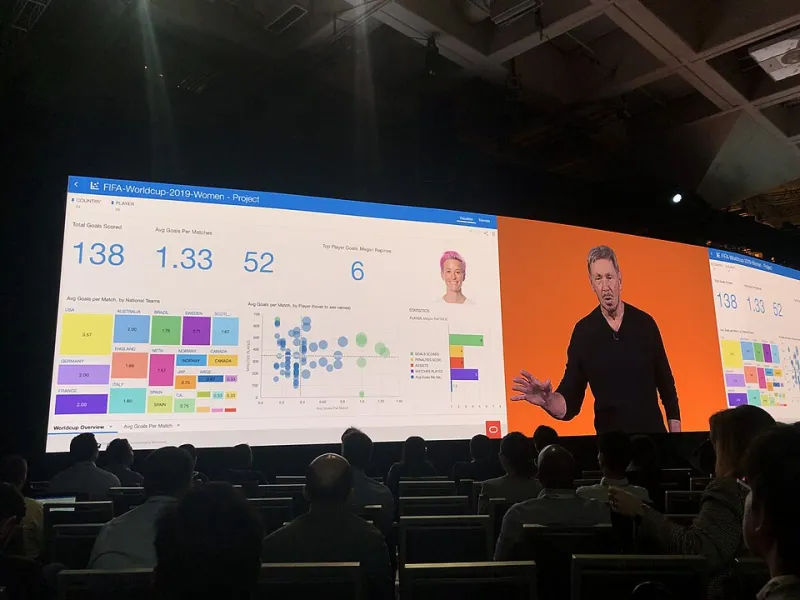
Photo: Kim Scarborough from Chicago, IL, CC BY-SA 2.0, via Wikimedia Commons
There is a particular kind of organizational pain that does not announce itself with a loud system failure or a dramatic data breach. It arrives quietly, buried in hours of manual data entry, in the time your sales team spends copying lead information from one platform into another, in the reports that require three different logins and two spreadsheet exports to produce. This is integration debt — and for a growing number of American businesses, it has become one of the most expensive line items on the balance sheet that never appears on any invoice.
The concept borrows from the software development world, where "technical debt" describes the long-term cost of taking shortcuts today. Integration debt works the same way. Each time a business adopts a new tool without a plan for connecting it to existing systems, it accumulates a liability. That liability compounds. And by the time most organizations recognize the problem, the cost of untangling it feels almost as daunting as continuing to live with it.
How Integration Debt Accumulates
The origin story is almost always the same. A startup or small business chooses a capable CRM to manage customer relationships. Six months later, the marketing team adopts a separate email automation platform because it has features the CRM lacks. A year after that, an e-commerce integration gets bolted on. Then a help desk tool. Then a project management system. Then a separate analytics dashboard.
Each of these decisions was rational in isolation. The problem is that they were never made as part of a coherent architecture. Instead of a unified digital ecosystem, the business ends up with what engineers sometimes call a "spaghetti stack" — a tangle of tools that interact poorly, if at all.
According to research from MuleSoft and Salesforce, the average large enterprise now uses more than 900 applications, and fewer than 30 percent of them are integrated with one another. For mid-sized US businesses, the numbers are smaller but the proportional dysfunction is often worse, because those companies rarely have dedicated integration engineering resources to manage the sprawl.
The Real Costs: Beyond the Subscription Fees
Most executives, when asked about their software costs, think about the monthly subscription bills. That math is straightforward. What is far harder to quantify — and therefore far easier to ignore — are the hidden operational costs that accumulate in the gaps between systems.
Manual data entry labor is the most obvious culprit. When a CRM and an accounting platform do not communicate, someone has to bridge that gap by hand. At even a modest hourly rate, those hours add up to thousands of dollars annually for a business of any meaningful size. More troubling is the error rate that accompanies manual processes: transposed figures, missed updates, and duplicated records that corrupt reporting and erode decision-making quality.
Context-switching costs are subtler but equally damaging. Cognitive science research consistently demonstrates that switching between applications and tasks imposes a mental overhead that reduces productivity by as much as 40 percent. When employees must navigate five separate platforms to complete a single workflow, the cumulative drag on output is substantial.
Delayed decision-making is the third major cost category. When data lives in silos, producing a coherent business intelligence picture requires assembling fragments from multiple sources — a process that is slow, error-prone, and often results in leadership making decisions based on information that is days or weeks out of date.
Building Your Integration Audit Framework
The first step toward resolving integration debt is an honest inventory. This does not require a consultant or an expensive software audit tool. It requires a structured conversation with the people who actually use your systems day to day.
Step one: Map every tool your organization currently pays for. Include not just the enterprise-level platforms but the departmental subscriptions that may be expensed individually. Many businesses discover tools they are still paying for that no one actively uses.
Step two: Document every manual data transfer. Ask team members to log, for one week, every time they copy information from one system into another. The results are almost always surprising. A single department might log dozens of manual transfers per day that no one had previously recognized as a systemic problem.
Step three: Identify your data flows. For each critical business process — lead generation, customer onboarding, invoicing, support resolution — trace the path that data takes from origin to outcome. Where does it get entered manually? Where does it get duplicated? Where does it stop moving entirely?
Step four: Prioritize by ROI, not by complexity. The instinct when confronting a fragmented stack is to attempt a comprehensive overhaul. That approach is almost always counterproductive. Instead, identify the two or three integration points where automation would eliminate the most manual labor or reduce the most decision-making latency. Solve those first. Use the efficiency gains to fund the next phase.
Consolidation vs. Integration: Choosing the Right Remedy
Not every integration debt problem requires building connectors between existing tools. Sometimes the more effective solution is consolidation — replacing two or three overlapping platforms with a single system that handles multiple functions natively.
The calculus here involves more than feature comparison. It involves switching costs, data migration complexity, team retraining requirements, and the long-term vendor roadmap. A platform that costs slightly more per month but eliminates two separate subscriptions and the integration overhead between them may deliver a net cost reduction within the first year.
For businesses that choose to integrate rather than consolidate, modern API-based middleware platforms — including tools like Zapier for simpler workflows and more robust solutions like Make or Workato for enterprise-grade automation — have dramatically lowered the technical barrier to connecting disparate systems.
The Compounding Returns of a Coherent Architecture
The businesses that invest in resolving their integration debt do not simply stop losing money. They begin generating returns that were previously impossible. When systems communicate in real time, reporting becomes instantaneous. When customer data flows automatically from acquisition through support, the quality of every customer interaction improves. When billing integrates with project management, revenue leakage from unbilled work effectively disappears.
Perhaps most importantly, a coherent digital architecture makes the business more agile. When the underlying systems are clean and connected, adopting a new tool or entering a new market becomes a deliberate, manageable decision rather than another layer of complexity added to an already strained foundation.
At MegaWeb Solutions, we work with businesses at precisely this inflection point — organizations that have grown past their original infrastructure and need a partner to help them build something that will scale. Whether the answer involves a redesigned web architecture, consolidated hosting, or a custom integration strategy, the principle is the same: your technology should be working for you, not the other way around.
The hidden tax on your tech stack is real. But unlike most taxes, this one is entirely optional.